Welcome
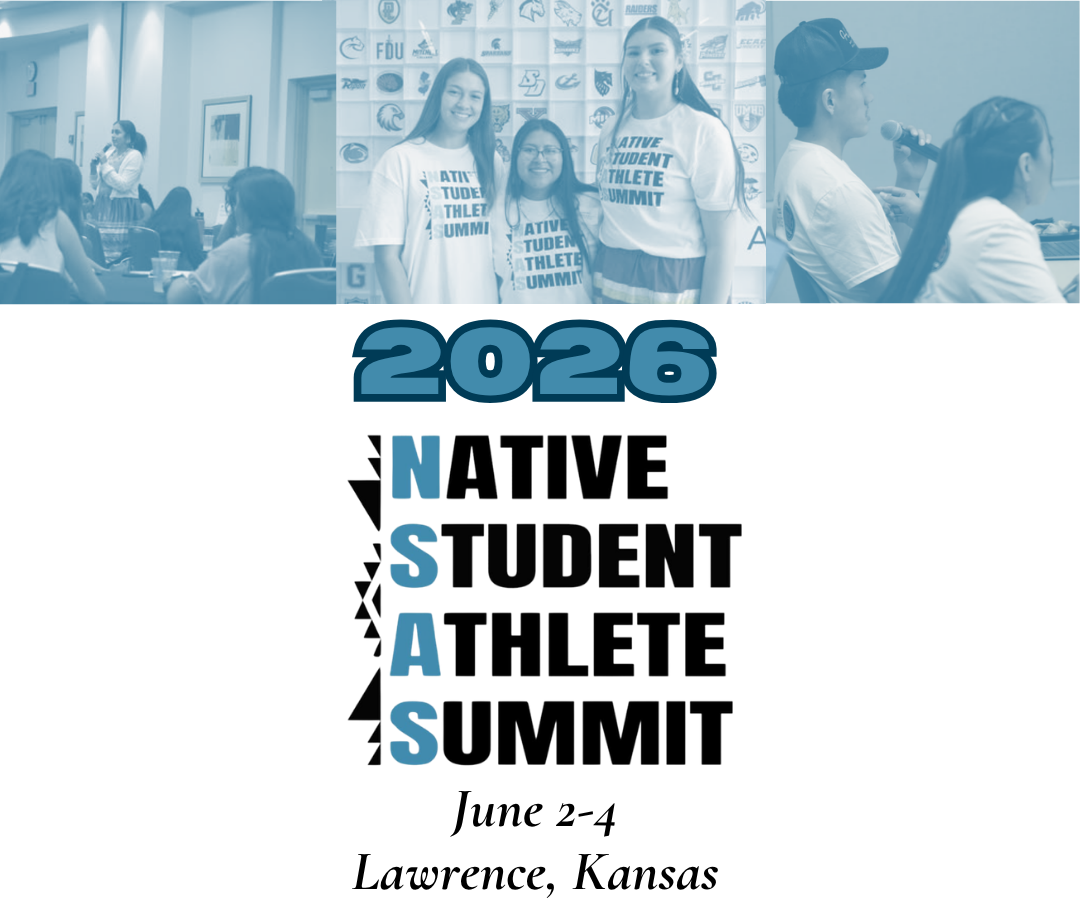
We Need Your Voice: The Story of the Second Native Student-Athlete Summit
June 2–4, 2026 | Lawrence, Kansas
Hosted by the University of Kansas and Haskell Indian Nations University
On a warm June afternoon in Lawrence, Kansas, Native student-athletes arrived from every corner of the country carrying more than backpacks and team gear. They carried their Nations, families, communities, and stories. Some traveled hundreds of miles. Others traveled thousands. Many were the only Native athlete on their team. Yet for three days, they stepped into a space where they were no longer alone.
The Second Annual Native Student-Athlete Summit (NSAS), hosted by the Indigenous Athletics Advancement Council (IAAC) in partnership with Running Strong for American Indian Youth, the University of Kansas, and Haskell Indian Nations University, brought together nearly fifty Native student-athletes and fifty professionals committed to advancing Indigenous excellence in collegiate athletics. Student-athletes represented thirty-two Indigenous Nations and competed across the NJCAA, NAIA, and all three NCAA divisions in sports including track and field, volleyball, softball, football, cross country, basketball, lacrosse, wrestling, soccer, swimming, golf, and crew.
Building upon the success of the inaugural Summit held at NCAA Headquarters in Indianapolis in 2025, the 2026 gathering continued a movement rooted in culture, community, leadership, and sovereignty. The mission remained clear: to center Native student-athlete experiences, access, and opportunities while creating a space where Indigenous athletes feel seen, supported, and connected to a growing network of peers, mentors, and leaders.
More importantly, the Summit challenged participants to think beyond themselves. Throughout every session, conversation, and shared meal, a call to action emerged:
Use your access to create someone else’s entry.
A Full Circle Moment
The Summit opened with a keynote presentation from Olympic Gold Medalist Billy Mills (Oglala Lakota), co-founder of Running Strong for American Indian Youth and one of the most celebrated Native athletes in history. For many participants, his presence represented a full-circle moment.
Long before Native student-athletes had a summit of our own, Billy Mills was paving a path through barriers that many thought impossible to overcome. His historic victory in the 10,000 meters at the 1964 Olympic Games became a symbol of Indigenous perseverance, excellence, and possibility. More importantly, his life has been dedicated to creating opportunities for Native youth and communities.
Throughout the Summit, Billy shared a simple yet profound message:
“We need your voice.”
It became the theme of the gathering.
His challenge to student-athletes was clear. Your story matters. Your culture matters. Your leadership matters. Use your voice not only for yourself, but for your people and for the generations that will follow. The opportunities they have today did not happen by accident—they exist because someone before them opened a door, challenged a system, or created a pathway. The responsibility now rests with this generation to do the same.
For many student-athletes, meeting Billy Mills was one of the most memorable moments of the Summit. One participant reflected:
“I got to meet my dad’s hero, who then became my hero—Billy Mills.”
Moments like these embodied the intergenerational spirit of the Summit. Billy’s presence connected participants not only to one of the greatest Native athletes of all time, but to the generations of Indigenous people whose dreams, sacrifices, and perseverance helped make these opportunities possible.
Learning from Indigenous Leaders
Across three days, student-athletes engaged with Indigenous leaders, professionals, entrepreneurs, filmmakers, advocates, and former student-athletes who shared their journeys and wisdom.
Presentations included Jude Schimmel (Umatilla), Paige Bethmann (Haudenosaunee), director and producer of Remaining Native; Ku Stevens (Yerington Paiute), student-athlete and star of Remaining Native; Samantha Card and Robert Doore (Blackfeet) of Success Beyond Gameday; Niya Blair Hackworth, NCAA Director of Inclusion; Izzy Yasana Hawley (Klamath, Modoc, and Filipina), Nike N7 Business Director; Brandon Joseph (Koyukon Athabascan and Muscogee Creek), founder of Decolonize Sports; and RaeAnn West (Navajo), Senior Financial Associate of Dreamcatcher Financial Solutions.
Participants explored topics including identity, leadership, financial wellness, advocacy, career pathways, storytelling, mental health, and navigating collegiate athletics as Indigenous people. Separate concurrent sessions for student-athletes and administrators allowed for meaningful conversations tailored to the unique experiences of each group.
One of the most impactful voices of the Summit came from Jude Schimmel. A former University of Louisville basketball standout who led the Cardinals to the 2013 NCAA Women’s Basketball National Championship game, Jude spoke candidly about identity, leadership, purpose, and life beyond basketball. Her message resonated deeply with student-athletes, many of whom grew up watching her compete on one of the biggest stages in collegiate athletics.
Her powerful message was simple, yet transformative:
“You are worth it. Go for your dreams and ask for things you know you deserve.”
Throughout the post-Summit evaluations, student-athletes repeatedly identified Jude’s session as one of the highlights of the Summit. For many, meeting someone they had admired since watching Louisville’s unforgettable run to the 2013 Women’s Final Four and National Championship game was a full-circle moment. While they had long respected her accomplishments on the court, hearing her speak about perseverance, identity, self-worth, and advocating for yourself made an even greater impact.
One student-athlete shared:
“For me, all the sessions were really important and I wish I could attend all of them. Each session taught me so much about myself, what I represent, and gave me a voice.”
In many ways, this reflection captured the purpose of the Summit. It was not simply about providing information or resources. It was about helping Native student-athletes better understand themselves, recognize the value of their stories, and strengthen their confidence as leaders.
Participants consistently spoke about the impact of hearing from Indigenous leaders who openly shared their journeys, challenges, and successes. As one student-athlete reflected:
“I am very grateful for this opportunity and I cannot express enough how thankful I am for this summit. It is exciting to make connections with athletes, administrators, and the council. It is also motivating and interesting to know that there are Native Americans through sports. Learning about their stories is also motivating to show that they all had to fight through some sort of adversity and that no one came from a perfect background.”
These stories reminded participants that success is rarely a straight path. The leaders and mentors who stood before them represented resilience, perseverance, and the power of staying connected to culture and community while pursuing their dreams.
Storytelling, Representation, and Abundance
A particularly meaningful evening brought participants to Haskell Indian Nations University for dinner and a screening of Remaining Native. The documentary, featuring Ku Stevens and directed by Paige Bethmann, explores contemporary Native identity, abundance, and the enduring impacts of federal Indian boarding school policies.
The screening and discussion provided an opportunity for reflection, dialogue, and healing. Through storytelling, participants examined the ways Indigenous peoples continue to carry history while creating futures rooted in strength, culture, and community.
Throughout the Summit, student-athletes repeatedly highlighted the importance of culture as a source of strength. One participant reflected:
“I liked how a lot of the athletes and speakers talked about how much their culture and their ways play a huge part in their success.”
Rather than viewing culture and athletics as separate parts of themselves, participants were encouraged to recognize how Indigenous values, teachings, and relationships continue to guide their success both on and off the field. The Summit created space for student-athletes to embrace their identities fully and understand that culture is not something left behind when pursuing athletic or academic excellence—it is often the very foundation of that success.
For many, the experience was more than representation—it was belonging.
Another student-athlete simply stated:
“I think the summit was beautiful.”
Those few words captured what many participants felt. The beauty of the Summit was found in the relationships, stories, laughter, reflection, and community that emerged when Native student-athletes were given a space intentionally created for them.
A Run Across Generations
The following morning, participants carried that reflection into action.
Building upon the momentum of Remaining Native, Ku Stevens led student-athletes, administrators, and professionals on a community run along the Billy Mills Cross Country Course at Haskell Indian Nations University. The experience created a powerful bridge between the stories shared the night before and the journeys each participant continues to walk today.
As runners moved across a course bearing Billy Mills’ name alongside Ku Stevens—whose own running journey honors his ancestors and the children who endured the federal boarding school system—they were reminded that Indigenous movement has always been about more than competition. It is about connection, remembrance, responsibility, and community.
The run became a living expression of the Summit’s themes. Participants reflected on those who came before them, the sacrifices that created opportunities for Native student-athletes today, and the responsibility they now carry to those who will follow.
Each step honored past generations while creating pathways for future ones.
The experience embodied two messages that echoed throughout the Summit. The first came from Billy Mills:
“We need your voice.”
The second emerged from presenters, mentors, and fellow student-athletes throughout the three days:
“Use your access to create someone else’s entry.”
As participants ran together, they were reminded that every opportunity gained through athletics and education creates an opportunity to open doors for someone else. Success is never individual. It belongs to families, communities, Nations, and future generations.
The run on the Billy Mills Cross Country Course served as a powerful reflection on the purpose of the Summit itself: honoring those who paved the way while committing to become pathmakers for those who are still coming.
Leadership Across Generations
The lessons from the run carried directly into the Summit’s final conversations about leadership, responsibility, and the future of Indigenous athletics.
A plenary panel featuring current and former Native student-athletes—including Skyler Benally-Bordeaux (Sicangu Lakota), Tyrone Bowen-Collateta (Seneca Nation), Lexus Redthunder (Sisseton Wahpeton Oyate), and Koa Baker (Mandan, Hidatsa, and Arikara Nation)—encouraged participants to think beyond competition and consider how leadership extends into community service, advocacy, and Nation building.
The panelists shared stories of challenge, growth, and responsibility, emphasizing that Native student-athletes occupy a unique role as representatives of their families, communities, and Nations. Their reflections reinforced a powerful truth: leadership is not about standing above others, but about lifting others alongside you.
One student-athlete reflected on the broader significance of the Summit:
“I appreciated the intent and effort to bring resources to the .425%. I think that it is good for us to be educated on these things and have opportunities to gain mentors. I also think that there is an opportunity here to maintain our culture. Often times I think many are discouraged from coming to events like these because they do not feel as connected to our culture as a whole. It is possible we can educate and empower the future generations to carry on the strength of our culture.”
This reflection speaks directly to one of the Summit’s most important goals. The Native Student-Athlete Summit is not only about supporting the student-athletes who attend today. It is about creating a stronger future for Native students and athletes who may not yet know these opportunities exist.
Again and again, participants were reminded that their educational and athletic journeys are not solely their own. Every degree earned, every championship won, every barrier broken, and every opportunity gained has the potential to create new possibilities for future generations.
“After going to the Summit, it was really important to embrace my culture because there’s other athletes on the reservation from my hometown that look up to me.”
Perhaps no reflection captured the purpose of the Native Student-Athlete Summit more clearly than these words. The Summit was never intended to end when participants returned home. It was designed to ripple outward into Tribal communities, campuses, athletic programs, and future generations. Student-athletes left with a renewed understanding that their visibility matters. By embracing their identities and pursuing excellence in the classroom, in competition, and in their communities, they become living examples of what is possible for younger Indigenous students who are watching.
A Movement Continues to Grow
The Native Student-Athlete Summit began as a dream more than twenty years in the making. In 2025, that dream became reality. In 2026, it became a movement.
What makes the Summit unique is not simply that it centers Native student-athletes. It creates a space where Indigenous knowledge, leadership, culture, and community are the foundation rather than an afterthought. Here, Native student-athletes are not asked to leave pieces of themselves behind. They are encouraged to bring their whole selves forward.
As participants departed Lawrence and returned to their campuses, communities, and Nations, they carried more than memories. They carried new friendships, mentors, inspiration, and responsibility.
They carried Billy Mills’ words:
“We need your voice.”
They carried a challenge from every presenter, mentor, and professional who shared their wisdom:
“Use your access to create someone else’s entry.”
And they carried a responsibility to ensure that their educational and athletic success is not the end of the story, but the beginning of new pathways for future generations of Indigenous students, athletes, leaders, and changemakers.
Bring your communities with you.
Bring your Nations with you.
Bring future generations with you.
Just as Billy Mills and countless Indigenous leaders helped create this moment, the next generation is waiting for someone to help create theirs.
This was their moment.

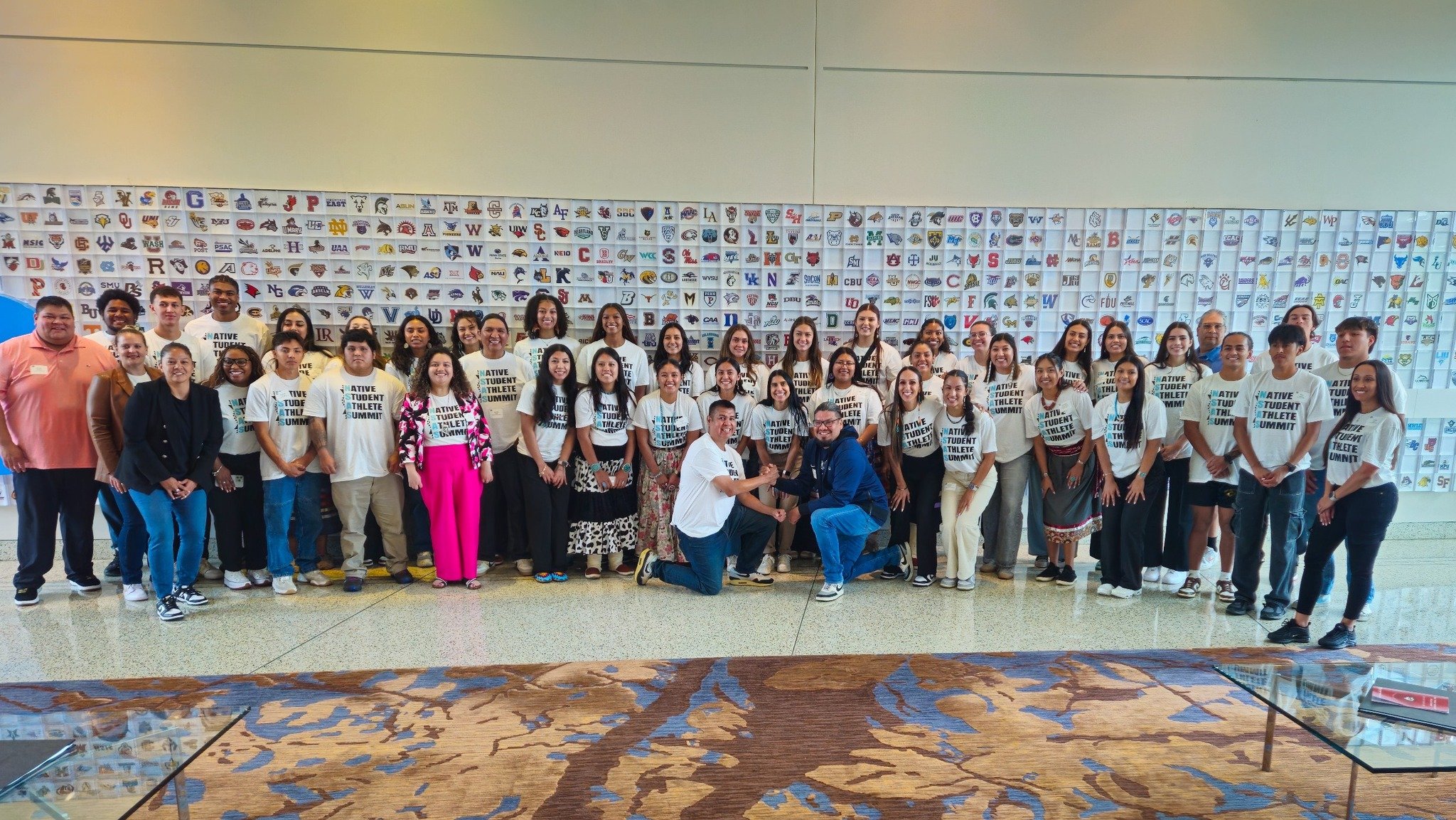
READ THE RECAP NSAS 2025
NCAA NATIONAL OFFICE
INDIANAPOLIS, INDIANA
JUNE 4-5, 2025
CHECK OUT THE PHOTOS!
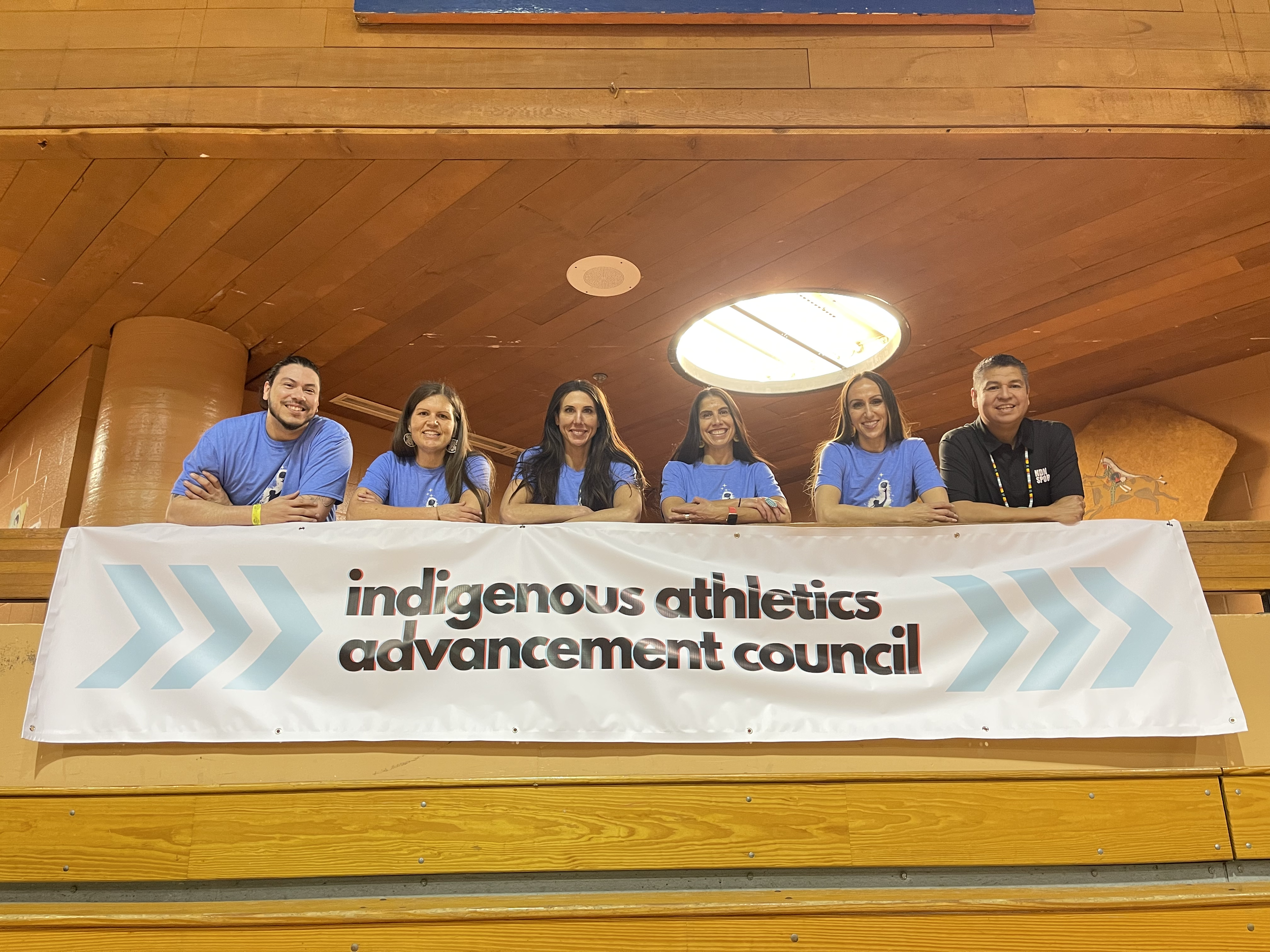
We promote the advancement of Indigenous peoples through sport.
The mission of the Indigenous Athletics Advancement council is to educate, promote, empower, and activate Indigenous peoples and communities around movement, physical fitness, and sport.
We also aim to disrupt the colonial systems that impact modern Indigenous peoples with the goal of integrating our people in leadership and decision-making roles in the sport business.

NCAA Women’s Final Four
We Indigenized the 2022 NCAA Women’s Final Four in Minneapolis, Minnesota.